
Keeneland Race Course stands as one of the most celebrated thoroughbred racing venues in the United States — a 1,200-acre limestone track and sales complex situated on the western edge of Lexington, Kentucky that has shaped the city’s identity, economy, and cultural character since its opening in 1936.
Unlike the commercial casino-adjacent racing operations that define much of American horse racing, Keeneland operates as a nonprofit organization that returns its proceeds to the thoroughbred industry and local community, giving it an institutional character that distinguishes it from virtually every other major racing venue in the country.
For Lexington residents, Fayette County property owners, and anyone seeking to understand why the Bluegrass Region occupies the center of American thoroughbred culture, Keeneland provides the clearest single expression of what makes this corner of Kentucky unlike anywhere else on earth.
The Founding Philosophy Behind Keeneland’s Identity
The track’s founding reflected a deliberate effort by Lexington’s thoroughbred community to create a racing venue that prioritized tradition, quality, and the sport’s intrinsic values over the gambling revenue and entertainment spectacle that dominated racing at commercial tracks elsewhere.
The original founders — a group of Fayette County horsemen who purchased the property from Jack Keene in 1935 — envisioned a track where the horses and the racing itself would remain central rather than becoming secondary to wagering operations.
This founding philosophy has shaped Keeneland’s development across nearly nine decades of continuous operation and explains the distinctive atmosphere that draws racing enthusiasts from across the country to Lexington each April and October for the two brief race meets that anchor Keeneland’s public calendar.
The Racing Calendar and Keeneland’s Seasonal Character
Keeneland’s racing schedule — two meets of approximately two weeks each in April and October — gives the track a deliberately limited public calendar that creates the scarcity value and seasonal anticipation that define its cultural character in Lexington.
The spring meet typically runs from early to mid-April, coinciding with the peak of the Bluegrass Region’s ornamental flowering season when dogwoods, redbuds, and the mature hardwood canopy of the surrounding horse farms are at their most visually dramatic.
The fall meet in October captures the full color of Kentucky’s hardwood forests transitioning through autumn — a visual backdrop that gives Keeneland’s limestone grandstand and manicured turf course one of the most photographed settings in American sport.
This seasonal rhythm shapes Lexington’s hospitality economy in ways that extend well beyond the track itself. Hotels fill months in advance for meet weekends, restaurants accommodate reservations from visitors who plan their Lexington trips around Keeneland’s calendar, and the broader Fayette County economy experiences the concentrated economic activity that a world-class sporting event generates across a compressed time window.
The Keeneland Association maintains public documentation of its racing history, nonprofit mission, and community investment that reflects the depth of the organization’s integration into Lexington’s civic and economic life.
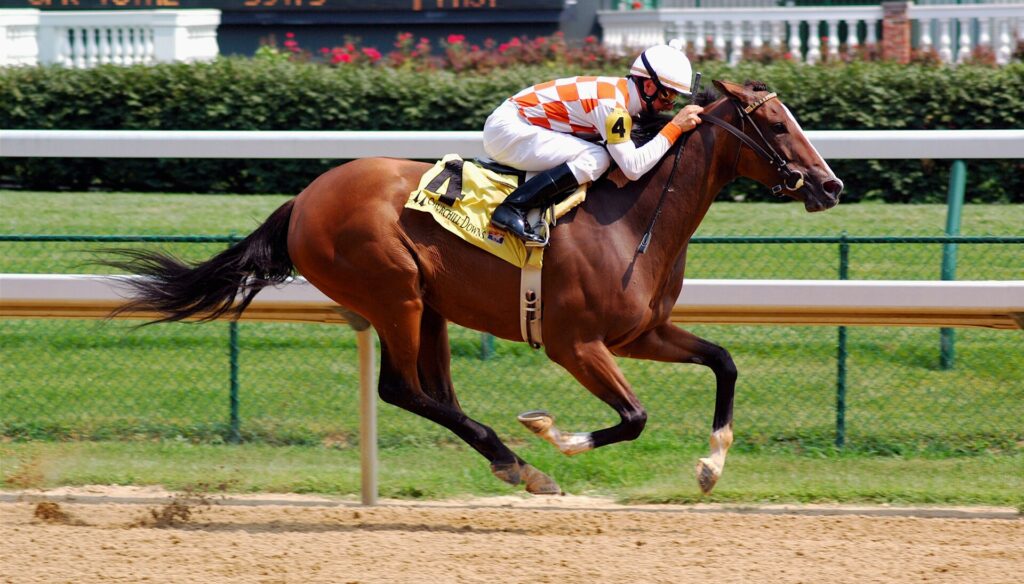
The Keeneland Sales and the Global Thoroughbred Market
Keeneland’s September yearling sale and its January horses of all ages sale represent two of the most significant thoroughbred auction events in the world — annual gatherings that draw buyers, sellers, and breeding professionals from across North America, Europe, the Middle East, Asia, and Australia to Lexington for transactions that collectively move hundreds of millions of dollars through the Bluegrass Region’s thoroughbred economy each year.
The September yearling sale in particular has established Keeneland as the preeminent venue for the sale of young horses that will eventually compete at the sport’s highest levels — a reputation built over decades of landmark sales that have consistently produced champions across American and international racing.
The sales infrastructure at Keeneland — the barns, walking rings, sale pavilion, and veterinary inspection facilities that support the auction process — represents a substantial physical investment in the logistics of evaluating and transferring ownership of horses worth from thousands to millions of dollars per animal.
Buyers at Keeneland’s sales include major racing operations, investment syndicates, and international buyers whose purchases contribute directly to the international reputation of Kentucky-bred thoroughbreds and to the property values of the Fayette County farms that produce the horses sold at Keeneland’s ring. The Jockey Club maintains the official registry of thoroughbred bloodlines in North America, providing the breed documentation that underlies the pedigree research that buyers conduct before bidding at Keeneland’s sales.
Kentucky’s Climate and the Bluegrass Turf Advantage
Kentucky’s climate gives the Lexington region a specific combination of conditions that thoroughbred breeders and trainers have recognized for centuries as optimal for raising horses whose bone density, cardiovascular development, and physical maturation benefit from the region’s distinctive geography and seasonal patterns.
The Bluegrass Region’s limestone bedrock — which underlies the characteristic blue-green grass that gives the region its name — leaches calcium into the water table and soil profile, creating the calcium-rich grazing conditions that support the skeletal development of young horses raised on Fayette County farms. This geological accident of the Inner Bluegrass Region has no precise parallel anywhere else in the world, and it explains why the concentration of thoroughbred farms within a 30-mile radius of Lexington persists generation after generation despite the global reach of the modern racing industry.
Kentucky’s climate also creates the specific turf conditions that make Keeneland’s grass course one of the most demanding and respected in American racing. The region experiences a humid continental climate — with average July highs near 87°F, average January lows near 24°F, and approximately 46 inches of annual precipitation according to NOAA climate data for Lexington — a moisture profile that sustains the dense, firm turf surface that Keeneland’s course maintenance staff works to maintain across the variable weather conditions that Kentucky’s spring and fall seasons deliver.
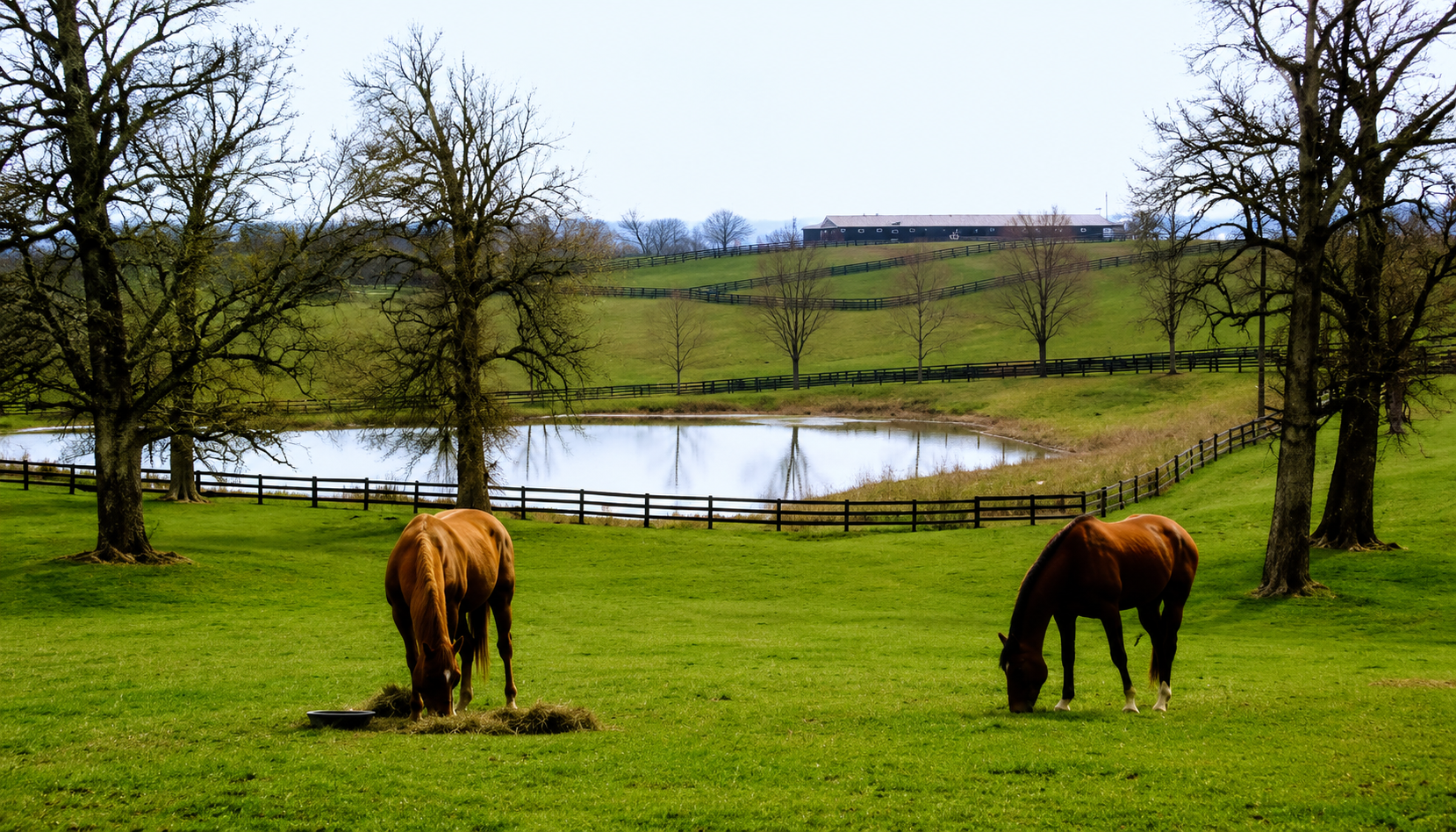
Preservation, Architecture, and the Keeneland Aesthetic
Keeneland’s physical environment — the limestone grandstand completed in 1936, the paddock gardens, the walking ring surrounded by mature trees, and the sales pavilion complex that has grown around the original racing facilities — reflects a sustained commitment to architectural consistency and landscape quality that gives the track its distinctive visual character.
The original grandstand’s limestone construction, which drew on the same Kentucky limestone used in the region’s historic farm buildings and stone fences, established the material vocabulary that has governed subsequent additions and renovations across nine decades of physical development. This architectural continuity is not accidental — it reflects the same founding philosophy that shaped Keeneland’s nonprofit mission and its limited racing calendar.
The National Register of Historic Places, administered by the National Park Service, recognizes Keeneland’s historic significance, connecting the track’s architectural and cultural heritage to the federal preservation framework that governs how its character-defining features may be maintained and developed over time.
For Fayette County property owners who live in the neighborhoods surrounding Keeneland, the track’s architectural standards and landscape quality represent a sustained anchor for property values and neighborhood character in western Lexington — a civic asset whose preservation benefits the surrounding community as directly as it serves the racing and sales clients who use the facility.
Keeneland’s Role in Lexington’s Civic Identity
Keeneland’s relationship to Lexington extends beyond its function as a racing and sales venue into the broader civic identity of a city that defines itself through its connection to the thoroughbred industry. The track’s nonprofit status, its philanthropic contributions to Lexington’s community organizations, and its role as the city’s most recognized international brand give Keeneland an institutional significance that no commercial racing operation could replicate.
When international visitors, racing professionals, and media arrive in Lexington for Keeneland’s meets and sales, they bring with them the global attention that reinforces Lexington’s position as the center of the thoroughbred world — a reputation that sustains property values, tourism, and professional investment across Fayette County in ways that extend well beyond the track’s fences.
For Lexington residents who experience Keeneland as a backdrop to daily life in the city’s western neighborhoods — the morning training traffic on Versailles Road, the crowds that fill downtown restaurants during meet weekends, the general awareness that one of the world’s great sporting venues sits at the edge of their city — the track is as much a part of place identity as the University of Kentucky or the Horse Park.
Those exploring the cultural landmarks, community resources, and distinctive character of Lexington Kentucky will find that Keeneland remains the single most powerful expression of what makes this city unlike any other in the American South.